Catalogue entry
Library of Ashurbanipal: The Clay Survived, the Wax Did Not
- By
- Where Tales Began
- Published
- Last substantive revision
How records are checked: Following the paper trail. Corrections: Fixes to the record. Questions: Contact us.
Fast facts
- Name
- Library of Ashurbanipal (Kuyunjik Collection), Nineveh
- Classification
- Royal Assyrian tablet collection of Ashurbanipal, king of Assyria 668 to about 630 BC
- Earliest ink
- Library colophons, 7th century BC (undated); earliest dated record of Ashurbanipal's collecting in the sources checked: acquisition lists of 648 BC (647 BC in one essay)
- Languages and regions
- Mainly Akkadian, in Assyrian and Babylonian script; found at Kuyunjik, Nineveh, northern Iraq; now almost all in the British Museum
- Core motifs
- Royal property colophons; acquisition lists of 648 BC; clay tablets beside wax-covered writing boards
- Surviving texts or data sources
- Around 32,000 clay tablets and fragments; about 1,400 with a library colophon; no writing boards survive from Nineveh
- TL;DR
- The Library of Ashurbanipal is the name for around 32,000 clay tablets and fragments from Nineveh, now almost all in the British Museum. Its colophons and acquisition lists name wax-covered writing boards as well as tablets. The clay survived the fall of Nineveh in 612 BC; in the sources checked, the boards did not.
Download these facts (CSV, library-ashurbanipal-entry-facts.csv)
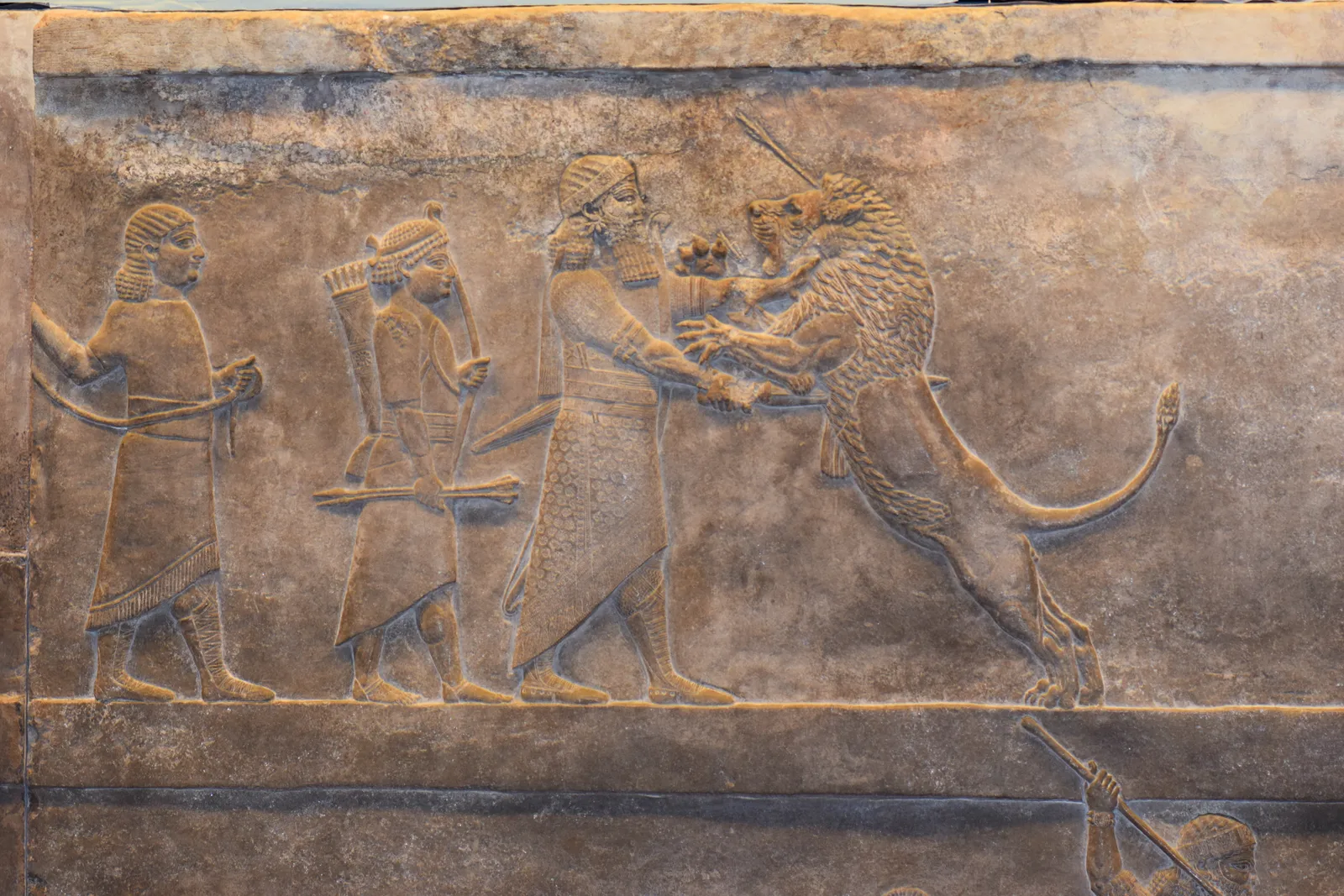
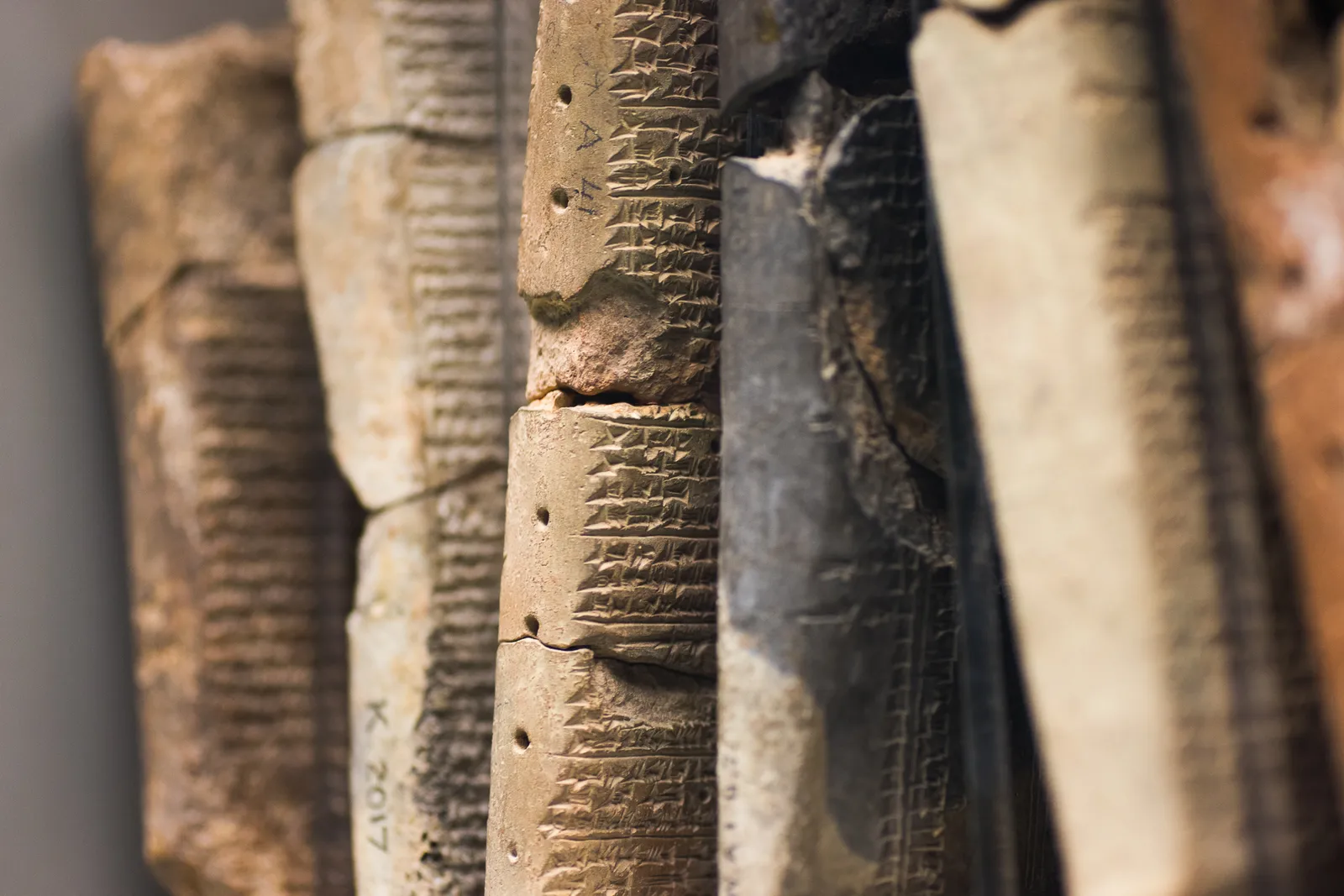
In the Library of Ashurbanipal, wax-covered writing boards stood beside clay tablets; only the clay survives. The British Museum's Ashurbanipal Library Project applies the name to around 32,000 cuneiform tablets and fragments that the museum dug from Nineveh, in northern Iraq. Most are thought to have been gathered or made on the orders of Ashurbanipal, king of Assyria from 668 to about 630 BC. Lists of arrivals at Nineveh record writing boards along with tablets, but Karen Radner of the Knowledge and Power project says the boards "all perished in the flames."
The Ashurbanipal Library Project dates the sack of Nineveh to 612 BC. The site's rules for dates and counts are in Following the Paper Trail.
Two palaces, one label
The Ashurbanipal Library Project calls the name "a convenient label." It covers many kinds of documents found across the mound of Kuyunjik, from scholarly texts to letters and contracts. The project admits that "we do not understand what constituted a library, how many there may have been, and which tablets belonged there."
The texts are mainly in Akkadian, English Wikipedia notes. A second project, Reading the Library of Ashurbanipal, run by the British Museum and LMU Munich, finds two main scripts on the tablets: Assyrian and Babylonian.
The first large group of library tablets turned up in Rooms 40 and 41 of the Southwest Palace. Sennacherib built that palace, and his grandson Ashurbanipal still used it. The Ashurbanipal Library Project dates the find to between March and May 1850, when Austen Henry Layard was away and his foreman Toma Shishman led the dig. English Wikipedia dates it to late 1849.
Layard named the rooms "the chambers of records" in his 1853 book Discoveries among the Ruins of Nineveh and Babylon. "To the height of a foot or more from the floor they were entirely filled with them," he wrote of the tablets (New York abridgment, 1853, chapter 16). In late 1853 Hormuzd Rassam found a second large group in the North Palace. Ashurbanipal had made that palace his main home from 646 BC.
In most cases, the Reading the Library project notes, no one can now tell which tablets came from which palace. The two find spots, it adds, "do not necessarily represent two distinct 'libraries'" under Ashurbanipal.
Almost all the tablets dug up so far are in the British Museum, according to the Ashurbanipal Library Project. Dozens of tablets and fragments reached other collections around the world.
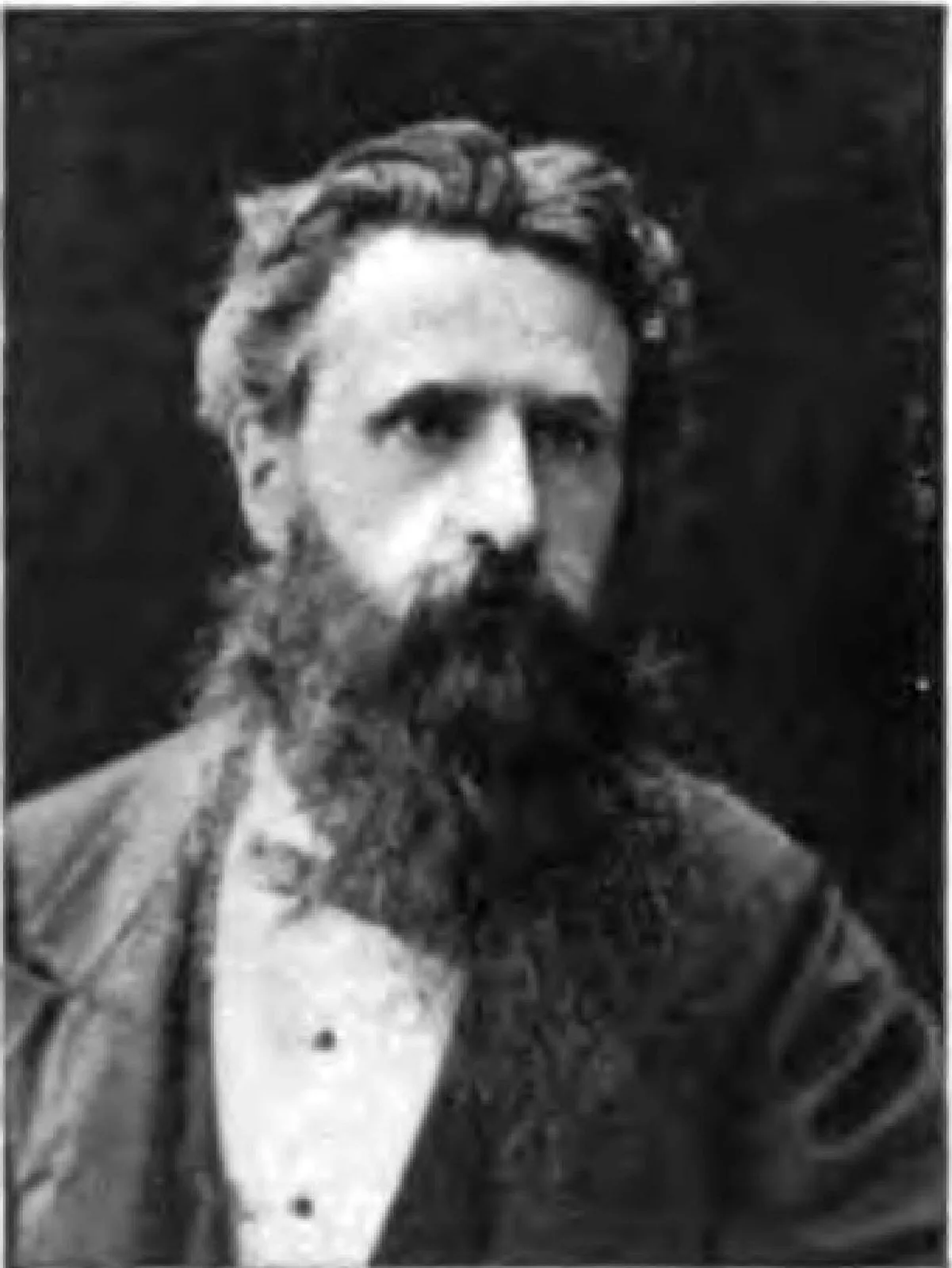
George Smith and the flood tablet
The British Museum hired George Smith in 1861 to rejoin tablets "smashed in antiquity," in the project's words. In 1872, Eleanor Robson notes, he translated the Gilgamesh epic's flood story on the tablet now numbered K 3375; that flood story is one of nine texts in Flood Myths Compared. Rassam later claimed the tablet came from the North Palace. The project says he "may have been mistaken."
Smith was sent to Nineveh in 1873, 1874 and 1876 to look for the tablet's missing pieces. In 1874 he found thousands more tablets in Layard's rooms.
Source and licence
"George Smith-Assyriologist 001" by Unknown photographer; reproduced in Morris Jastrow, The Civilization of Babylonia and Assyria (1915) — https://commons.wikimedia.org/wiki/File:George_Smith-Assyriologist_001.jpg — Public domain (anonymous photograph of George Smith (1840–1876), taken before his death in 1876 and published by 1915 in Morris Jastrow, The Civilization of Babylonia and Assyria; US: published before 1931; EU: anonymous work, more than 70 years after publication)How many tablets were in the library?
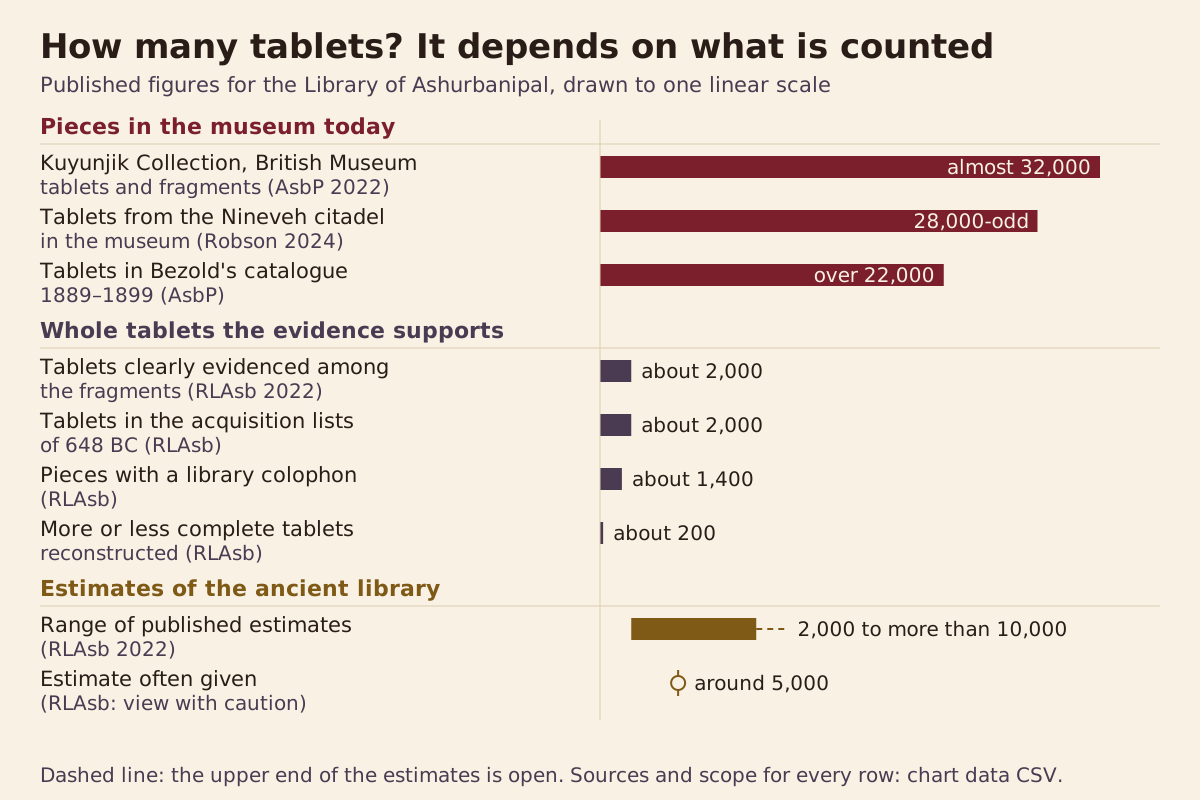
The answer depends on what is counted: museum pieces, whole tablets the pieces point to, or the library as it stood.
| Count | What it counts | Source |
|---|---|---|
| Almost 32,000 | Tablets and fragments in the British Museum's Kuyunjik Collection | Ashurbanipal Library Project, 2022 |
| 28,000-odd | Tablets from the royal citadel of Nineveh in the British Museum | Eleanor Robson, Knowledge and Power, 2024 |
| Over 22,000 | Tablets described in Carl Bezold's catalogue, 1889–1899 | Ashurbanipal Library Project, 2022 |
| About 2,000 | Tablets clearly evidenced among the surviving fragments | Reading the Library of Ashurbanipal, 2022 |
| About 2,000 | Tablets accounted for in the acquisition lists of 648 BC | Reading the Library of Ashurbanipal, 2022 |
| About 1,400 | Tablets or fragments carrying a library colophon | Reading the Library of Ashurbanipal, 2022 |
| About 200 | More or less complete tablets reconstructed in 170 years | Reading the Library of Ashurbanipal, 2022 |
| 2,000 to more than 10,000 | Published estimates of the ancient library | Reading the Library of Ashurbanipal, 2022 |
The Reading the Library project warns that the number of known fragments "is not a reliable guide to the original size of the Library." Estimates have often been around 5,000 tablets, it notes, a figure that "should be viewed with caution."
Source and licence
"How many tablets? Published counts for the Library of Ashurbanipal" by Where Tales Began, https://wheretalesbegan.com/lostbooks/library-ashurbanipal/, licensed under CC BY 4.0 (https://creativecommons.org/licenses/by/4.0/)Chart data: library-ashurbanipal-records.csv, with the source and link for every row.
What the colophons say
A colophon is a note a scribe wrote at the end of a tablet about how it was made. The Reading the Library project knows as many as 30 types of library colophon, each repeated word for word. None gives a date or names the scribe. All carry the same property mark: "Palace of Ashurbanipal, King of the Universe, King of Assyria."
The project places the type it calls Asb b early in the reign, presumably in the 660s BC. Asb b names the originals it was copied from. In the project's translation, lines 4 and 5 read: "According to tablets and writing boards, copies from Assyria and Sumer and Akkad (=Babylonia)."
The standard type, Asb c, speaks in the king's voice of "the highest level of the scribal art, which none among the kings, my predecessors, mastered." It goes on: "I wrote upon tablets, checked, and collated, and placed in my palace for consultation and for me to read out." These are claims the colophons make for the king. Eleanor Robson notes that the colophons on one set of Gilgamesh tablets "claim them to be in Assurbanipal's own hand."
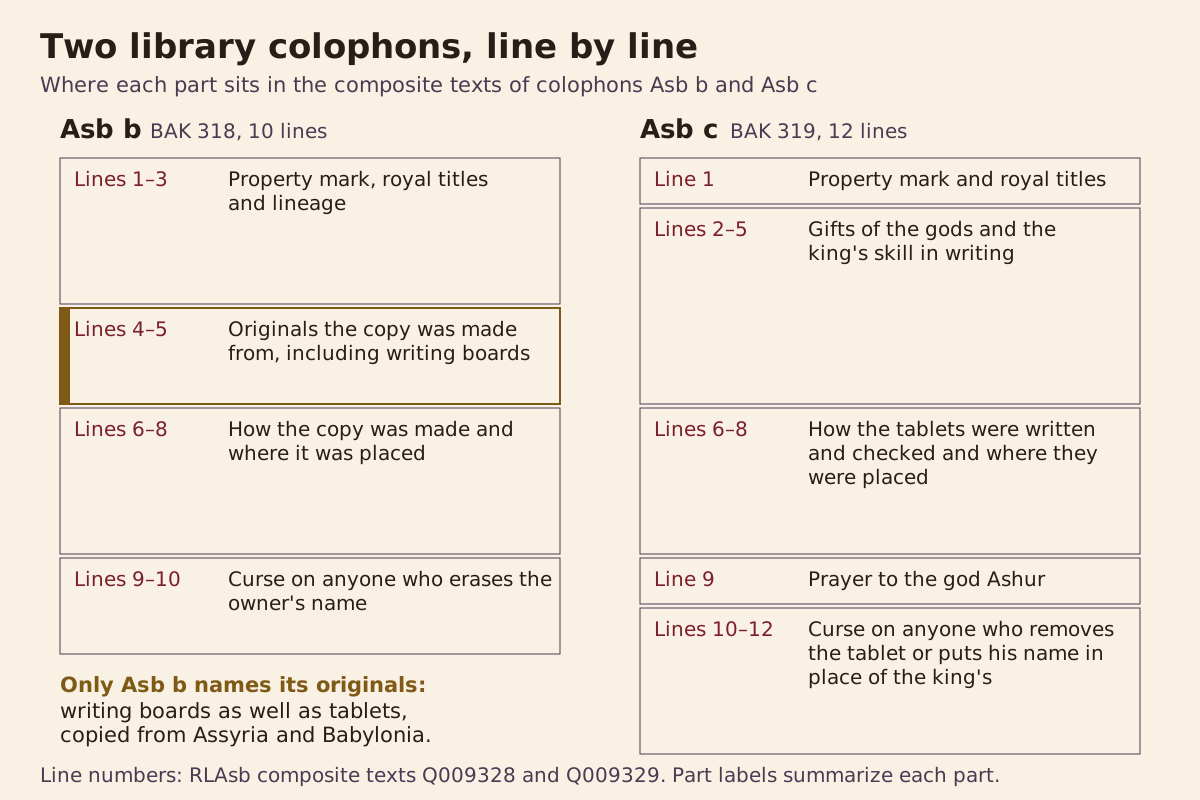
Chart data: library-ashurbanipal-colophon-lines.csv, line numbers and parts for both colophons.
Collected or confiscated?
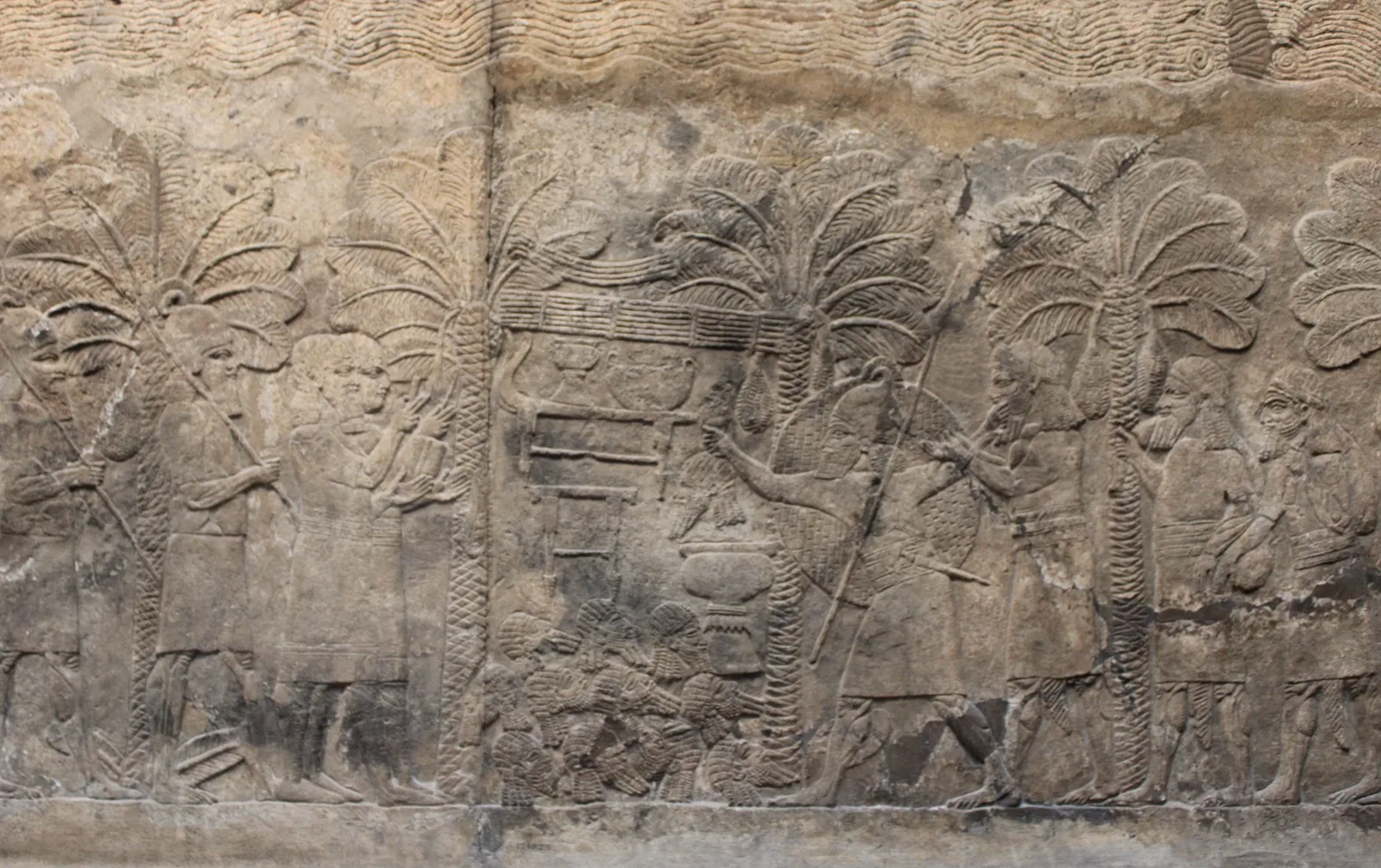
Some of the tablets and boards reached Nineveh after a civil war. Ashurbanipal's brother Shamash-shum-ukin, who ruled Babylonia, rebelled in 652 BC, and Assyria won four years later, Robson writes. Lists from Nineveh then record "the arrival at Nineveh of many hundreds of tablets and writing boards," with their earlier owners and contents, according to the Reading the Library project.
The Reading the Library project dates the lists shortly after the capture of Babylon in 648 BC. Robson's essay dates them to 647 BC.
How the tablets were taken is less settled than the word "loot" suggests. Robson calls them "presumably booty or tribute." The Reading the Library project writes that "the manner of the acquisition is not clear." Many owners gave only one tablet or a handful, and apart from one plausible match, no surviving tablet had been tied to an entry in the lists as of the project's 2022 pages.
English Wikipedia, citing Simo Parpola's 1983 study "Assyrian Library Records," puts the writing boards in the library at about 300.
Letters between an Assyrian king and Babylonian scholars about tablets survive only in copies made long after Assyria fell. Robson takes them to suggest that Ashurbanipal ordered the temples of Babylonia to copy their scholarly works. The Reading the Library project notes the suggestion that they are later literary works, written in response to Hellenistic library collecting.
Source and licence
"Campaign in southern Iraq of Ashurbanipal - couting booty and enemy heads in a palm grove" by Zunkir — https://commons.wikimedia.org/wiki/File:Campaign_in_southern_Iraq_of_Ashurbanipal_-_couting_booty_and_enemy_heads_in_a_palm_grove.jpg — CC BY-SA 4.0 (https://creativecommons.org/licenses/by-sa/4.0/)The boards that did not survive
A writing board was a wooden frame holding a thin layer of wax, written on with a stylus. Two or more leaves were often hinged together, Radner explains. Luxury boards were made of ivory, and several Assyrian examples survive at Assur and at Calah, modern Nimrud. Radner notes that one ivory board from Calah, now on display in the Ashmolean Museum in Oxford, was reassembled from its many fragments by Agatha Christie.
Radner writes that Assyrian library records "make it clear that the royal library at Nineveh contained them in large quantities." They seem to have been favored for long works such as Enuma Anu Enlil, a compendium of omens from the sky that would fill dozens of clay tablets. At Nineveh, in her account, the wax-covered boards "all perished in the flames," like the leather scrolls and the papyri.
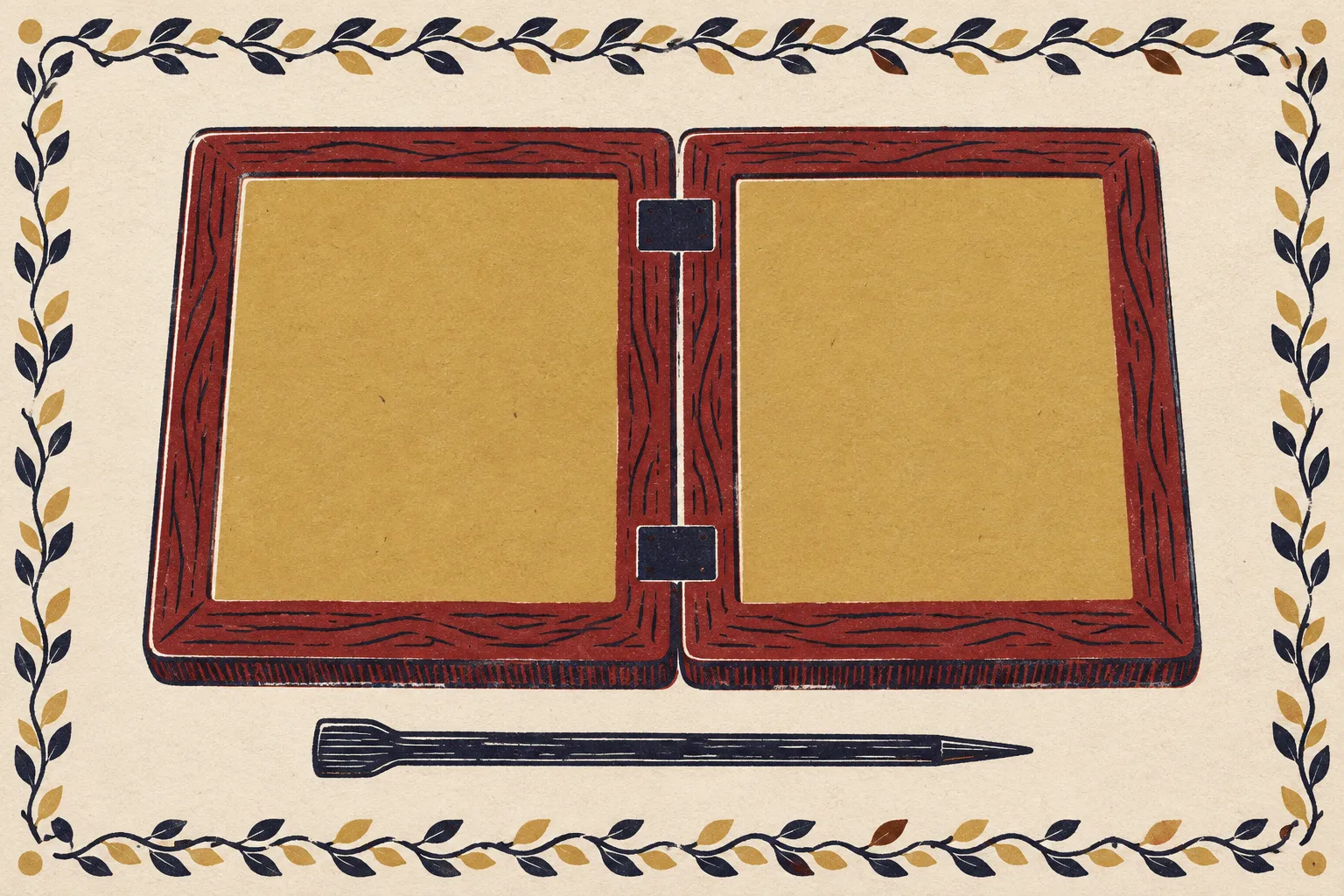
The boards are known from lists and mentions, not from copies of their own. That is also how the works in Lost Books of Antiquity are known, through summaries, quotations, lists and titles.
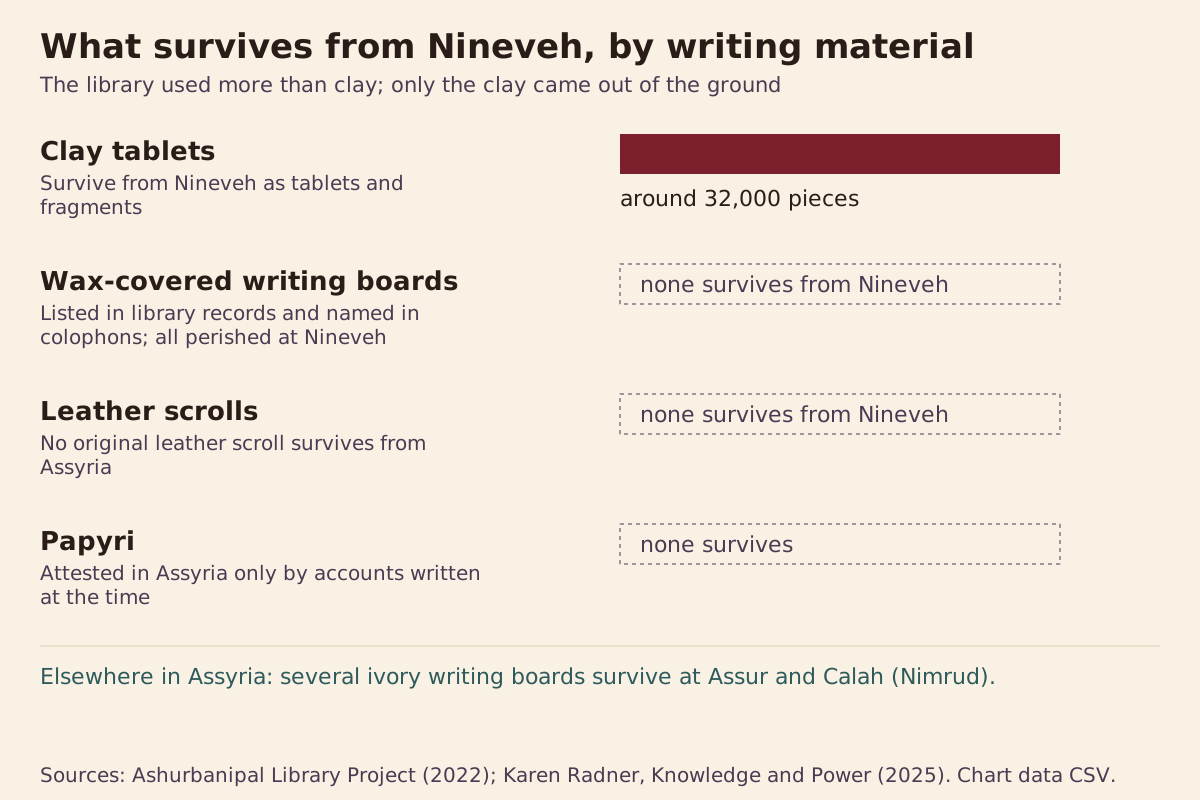
Did the fire preserve the tablets?
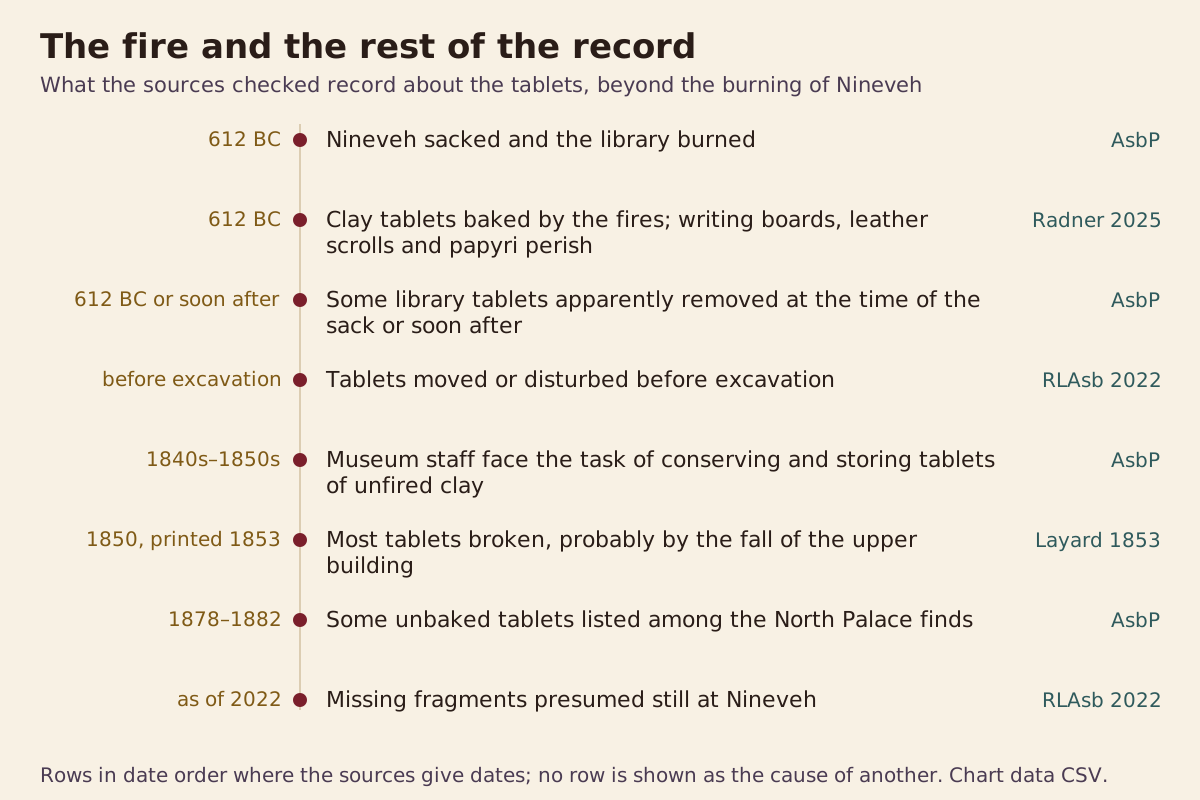
The sources checked give the fire of 612 BC a part in preserving the Nineveh tablets, but not the whole story. English Wikipedia, citing Lucien X. Polastron's 2007 book Books on Fire, reports the belief that the fire partly baked the tablets and so helped preserve them. The research pages say something close. The Ashurbanipal Library Project writes that the burning of the library at the sack of Nineveh in 612 BC "ensured its survival for us today."
Radner writes that the documents found in the palaces of Nineveh "were baked" by the fires of the battle of 612 BC, and adds that clay tablets "were rarely fired intentionally in antiquity." In her account, the fires of Nineveh's fall also destroyed the boards.
The record also holds what the fire story leaves out. Layard, who took the documents for "tablets and cylinders of baked clay," described the greater part of them as "broken into many fragments, probably by the falling in of the upper part of the building." The Ashurbanipal Library Project's list of North Palace finds includes "Some unbaked Rm 2 tablets," from Rassam's digging of 1878–82. It also notes that the museum's staff in the 1840s and 1850s had to work out "how to conserve and store unfired clay objects."
The Reading the Library project adds that the tablets were not found where they had been kept and that known texts are typically preserved to only about 50%. It concludes that many missing fragments "must still be at Nineveh." Some library tablets may also have left Nineveh around its fall: the Ashurbanipal Library Project points to one with an Ashurbanipal colophon found in recent excavations at Uruk. Herculaneum Scrolls asks the same question of a library Vesuvius buried: what the ash kept and what early openings destroyed.
Earliest ink
- Library of Ashurbanipal, in its own colophons: 7th century BC. The library colophons mark tablets as property of the palace of Ashurbanipal but carry no dates, so in the sources checked they fix the collection's first-ink date only to the 7th century BC. The Reading the Library project places type Asb b early in the reign, presumably in the 660s BC (RLAsb, "Making sense of the Library"). The collection also holds tablets written before his reign, the Ashurbanipal Library Project notes.
- Dated record of Ashurbanipal's collecting: 648 BC. Acquisition lists record tablets and writing boards reaching Nineveh, dated 648 BC by one Oracc project and 647 BC by another (RLAsb, "Assembling the Library"; Robson, "Assurbanipal's Library"). It is the earliest dated record of Ashurbanipal's collecting in the sources checked.
- Printed description of the tablet rooms: 1853. Austen Henry Layard, Discoveries among the Ruins of Nineveh and Babylon, chapter 16 of the New York abridgment (Project Gutenberg #39897).
Sources checked through 2026-10-19.
Where the trail goes next
- Books known only from what others wrote down: Lost Books of Antiquity follows works known from summaries, quotations and lists rather than from copies of their own.
- Another library a disaster buried: Herculaneum Scrolls follows the rolls of a buried villa library.
Cite this page
Where Tales Began. “Library of Ashurbanipal: The Clay Survived, the Wax Did Not.” First published October 20, 2026; last substantive revision October 20, 2026. https://wheretalesbegan.com/lostbooks/library-ashurbanipal/. Accessed: add the date you read this page.
- Author
- Where Tales Began
- Title
- Library of Ashurbanipal: The Clay Survived, the Wax Did Not
- Published
- Revised
- Address
- https://wheretalesbegan.com/lostbooks/library-ashurbanipal/
Sources
- Reading the Library of Ashurbanipal project (British Museum and LMU Munich; directors Enrique Jiménez and Jon Taylor), "Ashurbanipal Library Colophon b" (BAK 318), composite text Q009328, transliteration and translation, on Oracc. Based on materials prepared by the DFG-AHRC-funded Reading the Library of Ashurbanipal Project. oracc.museum.upenn.edu/asbp/rlasb/Q009328 Read: composite text, lines 1–10, with translation Text licence: CC BY-SA 3.0
- Reading the Library of Ashurbanipal project (British Museum and LMU Munich; directors Enrique Jiménez and Jon Taylor), "Ashurbanipal Library Colophon c" (BAK 319), composite text Q009329, transliteration and translation, on Oracc. Based on materials prepared by the DFG-AHRC-funded Reading the Library of Ashurbanipal Project. oracc.museum.upenn.edu/asbp/rlasb/Q009329 Read: composite text, lines 1–12, with translation Text licence: CC BY-SA 3.0
- Austen Henry Layard, Discoveries among the Ruins of Nineveh and Babylon (New York: G. P. Putnam & Co., 1853; abridged from the larger work), Project Gutenberg eBook #39897. www.gutenberg.org/ebooks/39897 Read: chapter 16, Discoveries at Kouyunjik and the chambers of records (1853 New York abridgment)
- Jonathan Taylor, "What is the Library?" and "A royal collection," Ashurbanipal Library Project, Department of the Middle East, British Museum, 2022, on Oracc; with the project home page. oracc.museum.upenn.edu/asbp/WhatistheLibrary Read: full pages (What is the Library?, A royal collection, home page) Text licence: CC BY-SA 3.0
- Jonathan Taylor, "Excavations begin," Ashurbanipal Library Project, British Museum, 2022, on Oracc. oracc.museum.upenn.edu/asbp/ArchaeologyoftheLibrary/Excavations Read: full page Text licence: CC BY-SA 3.0
- Jonathan Taylor, "Which tablets are which," Ashurbanipal Library Project, British Museum, 2022, on Oracc. oracc.museum.upenn.edu/asbp/ArchaeologyoftheLibrary/Whichtabletsarewhich Read: full page Text licence: CC BY-SA 3.0
- Jonathan Taylor, "Areas of Nineveh" and "The Southwest Palace," Ashurbanipal Library Project, British Museum, 2022, on Oracc. oracc.museum.upenn.edu/asbp/AreasofNineveh Read: full pages (Areas of Nineveh, The Southwest Palace) Text licence: CC BY-SA 3.0
- Jonathan Taylor, "The North Palace," Ashurbanipal Library Project, British Museum, 2022, on Oracc. oracc.museum.upenn.edu/asbp/AreasofNineveh/NorthPalace Read: full page Text licence: CC BY-SA 3.0
- Jonathan Taylor, "Recording the Library," Ashurbanipal Library Project, British Museum, 2022, on Oracc. oracc.museum.upenn.edu/asbp/RecordingtheLibrary Read: full page Text licence: CC BY-SA 3.0
- Jonathan Taylor, "Cataloguing the Library" and "Documenting the Library," Ashurbanipal Library Project, British Museum, 2022, on Oracc. oracc.museum.upenn.edu/asbp/RecordingtheLibrary/CataloguingtheLibrary Read: full pages (Cataloguing the Library, Documenting the Library) Text licence: CC BY-SA 3.0
- Jonathan Taylor, "Project," Reading the Library of Ashurbanipal, British Museum and LMU Munich, 2022, on Oracc. oracc.museum.upenn.edu/asbp/rlasb/Project Read: full page Text licence: CC BY-SA 3.0
- Jonathan Taylor, "Library colophons," Reading the Library of Ashurbanipal, British Museum and LMU Munich, 2022, on Oracc. oracc.museum.upenn.edu/asbp/rlasb/Librarycolophons Read: full page Text licence: CC BY-SA 3.0
- Jonathan Taylor, "The colophons explained," Reading the Library of Ashurbanipal, British Museum and LMU Munich, 2022, on Oracc. oracc.museum.upenn.edu/asbp/rlasb/Librarycolophons/Colophonsexplained Read: full page Text licence: CC BY-SA 3.0
- Jonathan Taylor, "Assembling the Library," Reading the Library of Ashurbanipal, British Museum and LMU Munich, 2022, on Oracc. oracc.museum.upenn.edu/asbp/rlasb/AssemblingtheLibrary Read: full page Text licence: CC BY-SA 3.0
- Jonathan Taylor, "Making sense of the Library," Reading the Library of Ashurbanipal, British Museum and LMU Munich, 2022, on Oracc. oracc.museum.upenn.edu/asbp/rlasb/AssemblingtheLibrary/MakingsenseoftheLibrary Read: full page Text licence: CC BY-SA 3.0
- Eleanor Robson, "Assurbanipal's Library," Knowledge and Power in the Neo-Assyrian Empire, Higher Education Academy, 2024 (content last modified 17 April 2024), on Oracc. oracc.museum.upenn.edu/saao/knpp/Essentials/Assurbanipal%27sLibrary Read: full page Text licence: CC BY-SA 3.0
- Karen Radner, "Assyrian writing materials: clay tablets, writing-boards and leather scrolls," Knowledge and Power in the Neo-Assyrian Empire, Higher Education Academy, 2025 (content last modified 31 March 2025), on Oracc; with the project's entries for Calah/Kalhu and Nineveh in "People, gods & places." oracc.museum.upenn.edu/saao/knpp/Essentials/Writingmaterials Read: full page; place entries Calah/Kalhu and Nineveh Text licence: CC BY-SA 3.0
- Simo Parpola, "Assyrian Library Records," Journal of Near Eastern Studies 42, no. 1 (1983): 1–29. doi.org/10.1086/372983 Read: bibliographic record only
- English Wikipedia, "Library of Ashurbanipal" (read 2026-10-19). en.wikipedia.org/wiki/Library_of_Ashurbanipal Read: summarized here through English Wikipedia